What Is Ehretia Microphylla? Names, Size, Leaves and Uses
By Muhammad Hamza · Published · Updated
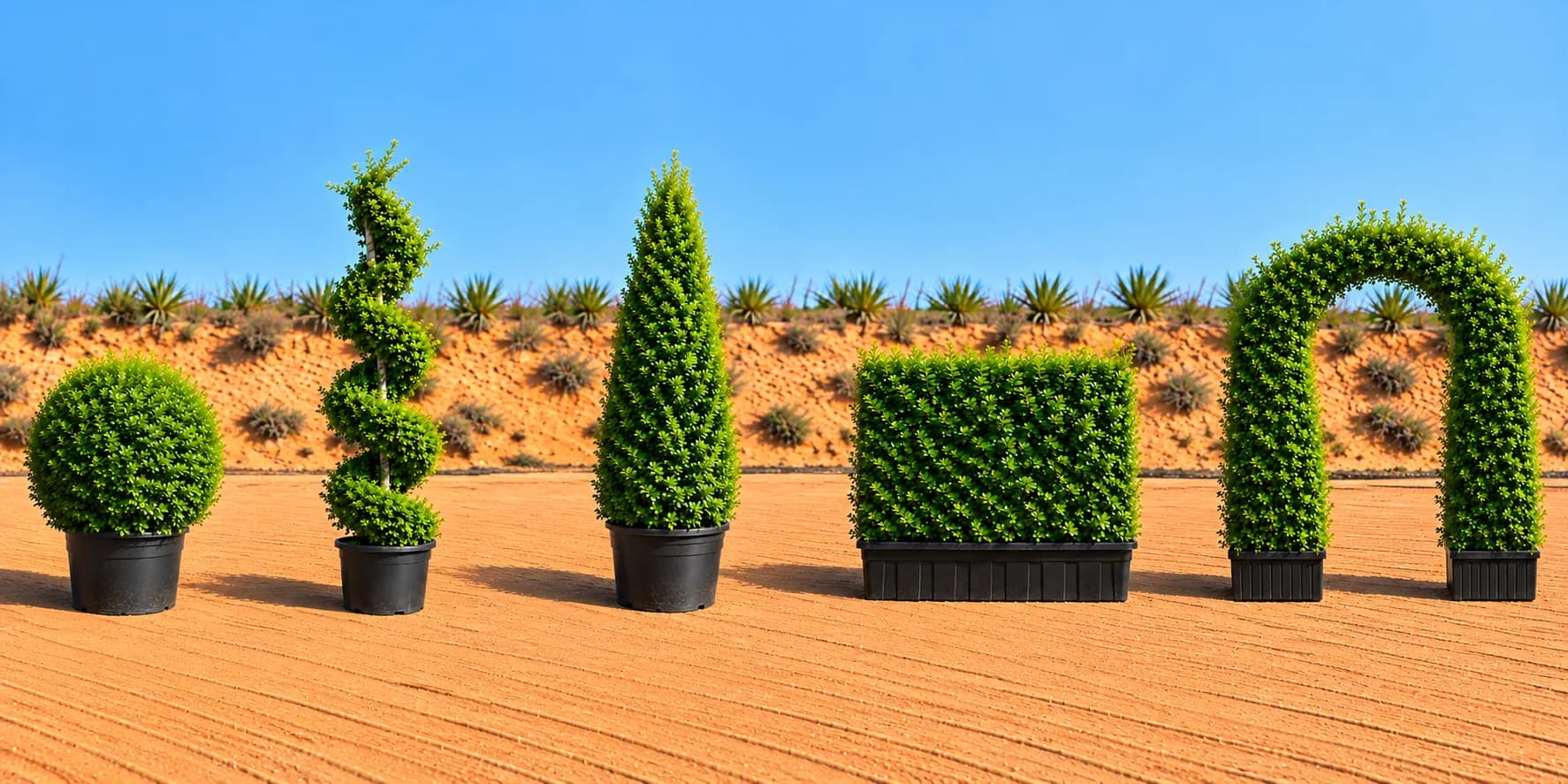
Ehretia microphylla is a shrub or small tree, usually 1 to 4 m tall, with small leathery leaves, tiny white flowers and small red to orange fruit. It is also called Fukien tea and Carmona. It takes heavy clipping, so it is widely grown as hedges and as shaped topiary.
What are the names for Ehretia microphylla?
The accepted botanical name is Ehretia microphylla, described by Lamarck in 1792. You will also see it sold under older names, mainly Carmona retusa and Carmona microphylla. These are synonyms, which means they point to the same plant.
Common names include Fukien tea, Fukien tea tree, Philippine tea and Ceylon boxwood. In Arabic the name people use is كارمونا. The genus is named after the botanical artist Georg Dionysius Ehret.
Be careful with Ehretia anacua. It is a different species, and some online shops copy its description onto pages about Ehretia microphylla.
Where does it come from?
Ehretia microphylla is native to a wide area from India through southern China and Southeast Asia to the Philippines and Taiwan. Kew's plant database also lists the Gulf States as an area where it has been introduced. In the wild it grows in open, sunny and fairly dry places such as thickets and light forest.
What does it look like?
- Size: sources give 1 to 4 m for a plant left to grow, and some give 1 to 3 m. Shaped plants are kept much smaller.
- Leaves: small, thick and rough, about 1.5 to 4 cm long, with a few teeth near the tip. They grow in clusters, which makes the surface dense.
- Flowers: small and white, about 8 to 10 mm wide.
- Fruit: small, round, 3 to 6 mm, red to orange.
Why is it grown into shapes?
New shoots grow from every node of the stem, so the plant fills in densely after a cut. It also accepts heavy pruning. Parks in Hong Kong and other cities clip it into hedges and topiary shapes, and it is used for screens, containers and green fences.
That is why we work with this plant. A single Ehretia can be trained into a ball, a cone, a flat wall panel, a spiral or an arch, and every shape keeps the same small, glossy leaf.
Does Ehretia grow in full sun?
Parks agencies recommend full sun, moderate water and well-drained soil. Our plants are grown outdoors in full sun, and in our experience plants in customers' gardens have stayed lush through the UAE summer. For watering and feeding, read our Ehretia care guide for the UAE.
Which shapes do we supply?
We supply five shapes: ball, cone, wall, spiral and door, from 40 cm to 250 cm. Trade buyers can see the full list on the wholesale page.
Ehretia Ball, 40 to 120 cm
An Ehretia ball is an Ehretia microphylla plant clipped into a dense, even sphere and grown in a pot. We supply five sizes, from 40 to 120 cm including the pot, to landscapers, designers, nurseries and homes across the UAE. Delivery takes 2 to 3 days.